A tidy cabin is not merely a visual upgrade. It can make daily driving calmer, faster, and more predictable. The real question is simple: How to organize car space with accessories without creating new safety problems? This guide, “10 Best Car Accessories to Organize Your Space,” examines practical solutions for modern drivers, including seat-back organizers, console trays, trunk dividers, cable holders, and compact trash containers.
The need is growing. S&P Global Mobility reported that the average age of U.S. light vehicles reached 12.6 years in 2024. Older vehicles often lack dedicated storage for phones, charging cables, groceries, and emergency supplies. Well-designed accessories can improve usability without requiring a new vehicle. However, fit matters. A loose organizer can slide during braking, while an overfilled console can obstruct controls. Not every accessory fits.
Safety must guide every recommendation. The National Highway Traffic Safety Administration recorded 3,047 deaths involving distracted driving in 2022. That figure does not prove that storage products prevent crashes. It does show why drivers should secure loose objects and reduce searching while moving. Each product should be judged by material quality, attachment strength, cleaning ease, visibility, and compatibility with airbags or seat belts. Small choices matter. A tested divider keeps bottles upright. A cable clip prevents a charger from falling beneath the pedals. Still, organization is not magic. Drivers must remove unnecessary items, check mounting points regularly, and keep essential controls unobstructed. This evidence-based approach helps separate genuinely useful accessories from attractive clutter.
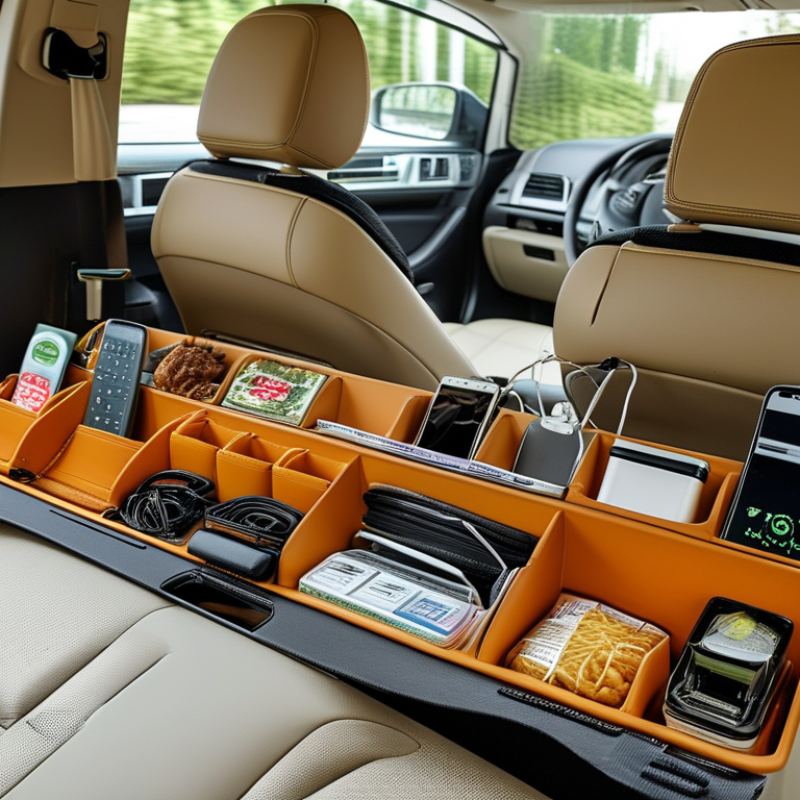
10 Best Car Accessories to Organize Your Space?
NHTSA recorded 3,275 distracted-driving deaths in 2023. That figure should shape how we choose car organizers. The goal is not to fill every gap. It is to reduce reaching, searching, and visual attention away from traffic. In routine vehicle checks, the best accessories stay secure during braking and keep controls visible. Keep it reachable. Less searching.
Useful choices include a seat-back organizer, center-console tray, cable clips, cup-holder insert, glovebox divider, door-pocket bin, under-seat pouch, trunk storage cubes, cargo net, and a slim document sleeve. Each item should have one clear purpose. A console tray can hold coins and keys. Cable clips can stop a charging wire from falling near the pedals. Trunk cubes can separate groceries, tools, and emergency supplies. Small labels help, although I sometimes remove them after a week.
Safety matters more than appearance. Avoid organizers that cover airbags, block mirrors, hide warning lights, or interfere with seat-belt movement. Headrest-mounted storage needs special care during sudden stops. Heavy objects should stay low and secured. Do not place loose bottles, tablets, or metal tools on the dashboard. The safest system may look less tidy than expected. That is worth accepting. An organizer that creates one extra reach defeats its purpose. Check the setup while parked, then test it on a quiet road before daily use.
Selection priority: accessories should improve organization without obstructing the driver’s view, steering wheel, pedals, seat-belt path, airbags, controls, or emergency equipment. NHTSA reported 3,275 traffic fatalities involving distracted driving in the United States in 2023.
| Rank | Accessory Type | Best Location | Primary Organization Benefit | Safety-Based Selection Criteria | Distraction Risk | Recommended Design Features |
|---|---|---|---|---|---|---|
| 1 | Trunk organizer | Cargo area | Separates groceries, emergency supplies, tools, and cleaning items. | Must remain below the driver’s rearward sight lines and should not interfere with cargo-area access or seat folding. | Low | Collapsible walls, non-slip base, reinforced handles, and tie-down compatibility. |
| 2 | Cargo net | Trunk or hatchback cargo floor | Helps prevent loose items from sliding during braking or cornering. | Use only approved anchor points; do not cover emergency-release handles or overload the net. | Low | Elastic retention, durable hooks, visible load limit, and secure attachment points. |
| 3 | Seat-back organizer | Rear surface of a front seat | Keeps passenger items, books, and small travel supplies off the floor. | It must not interfere with seat adjustment, rear-seat belts, side-impact airbag areas, or the driver’s mirror view. | Medium | Low-profile pockets, adjustable straps, rounded edges, and a secure upper-and-lower attachment system. |
| 4 | Center-console divider | Center console | Separates frequently used small items and reduces rummaging while driving. | Must preserve the console lid, gear selector, parking-brake controls, charging ports, and manufacturer-supplied storage access. | Medium | Removable compartments, soft edges, heat-resistant material, and a stable fit that does not rattle. |
| 5 | Under-seat storage tray | Under a front or rear seat | Uses otherwise unused space for flat emergency or travel items. | Must not block seat rails, wiring, seat-belt anchors, ventilation ducts, or seat-mounted airbag components. | Low | Low height, rounded corners, heat-resistant construction, and a positive stop that prevents sliding forward. |
| 6 | Door-pocket divider | Interior door pockets | Stops bottles and small objects from moving around in deep door bins. | Must not obstruct door handles, window switches, side-airbag markings, or the door’s closing mechanism. | Low | Flexible fit, non-slip lining, spill-resistant surface, and no protruding hard edges. |
| 7 | Cup-holder insert | Existing cup holder | Keeps small items upright and prevents coins or cables from collecting loosely. | Must not reduce access to gear selection, climate controls, parking controls, or the seat-belt buckle. | Medium | Removable design, spill containment, secure fit, and no raised obstruction near the driver’s hand controls. |
| 8 | Cable-management sleeve or clip | Dashboard edge or center-console area | Keeps charging cables away from the steering wheel, shifter, and pedals. | Cables must never cross the steering column, accelerator, brake, clutch, airbag cover, or driver’s line of sight. | Medium | Short routing path, heat-resistant adhesive or mechanical clip, quick release, and no sharp cable bends. |
| 9 | Glove-box compartment tray | Glove box | Separates registration documents, manuals, pens, and small maintenance items. | Do not overfill the glove box or interfere with the passenger airbag panel and glove-box closing action. | Low | Lightweight compartments, secure fit, heat-resistant material, and unobstructed owner’s-manual access. |
| 10 | Headrest-mounted tablet or document holder | Rear-seat headrest area | Keeps rear-passenger media or documents organized and off the seats. | Use only for passengers; never place a screen where it is visible to the driver or where it interferes with head-restraint adjustment. | High | Quick-release mount, rounded edges, secure retention, and a position limited to the rear passenger viewing zone. |
Reference: National Highway Traffic Safety Administration (NHTSA), Traffic Safety Facts: Distracted Driving, 2023. Accessory compatibility should always be checked against the vehicle owner’s manual.
: It should reduce reaching, searching, and visual distraction while driving. Keep essential items easy to access. Keep it simple.
Use a console tray for keys and coins. Cable clips can keep charging wires away from the pedals. A slim door-pocket bin may hold tissues or sunglasses.
Place heavy items low and close to the rear seatbacks. Use a divider for tools and groceries. A cargo net can stop small bags from rolling.
Yes. A bottle, tablet, or metal tool can fly forward. Secure heavy objects with suitable restraints. Do not use a cargo net for heavy loads unless it is designed for them.
Measure the available space and check the attachment points. The organizer must not block airbags, mirrors, warning lights, or seat belts. Measure twice.
Follow the vehicle manual and the accessory’s load limit. Never exceed the weakest component’s capacity. A weak hook can fail before the storage box does.
Check stitching, buckles, hinges, hooks, and plastic edges every month. Heat, dust, and repeated loading can weaken them. Replace damaged parts early.
Yes. Check everything while parked, then drive slowly on a quiet road. Listen for movement and watch for blocked controls. I sometimes overfill one compartment, which shows the layout needs review.
No. More storage can encourage extra weight and unnecessary items. Remove unused sports gear and seasonal supplies regularly. A smaller system may work better.
This guide explains how to organize car space with accessories while keeping safety and practicality at the center. Using the reported 3,275 distracted-driving deaths in 2023 as a reminder to reduce in-car distractions, it presents ten useful accessory types for the front cabin, including console organizers, visor holders, seat-gap storage, and cup-holder solutions. These tools can keep essential items secure and accessible without blocking controls, visibility, or movement.
The guide also covers backseat and passenger storage through headrest organizers, door-pocket inserts, and compact travel holders. For the trunk and cargo area, it highlights storage bins, nets, hooks, and dividers that help prevent items from shifting during travel. Each option should be checked for secure fit, suitable load capacity, durability, and compatibility with the vehicle. SAE and ISO guidance can provide useful reference points when evaluating materials, installation, and overall safety.

 Vivi Auto Accessories