7 Best Ways to Avoid Low Quality Car Accessories?

Time:2026-09-21 Author:Amelia
0%

Choosing car accessories is rarely as simple as comparing prices online. A glossy package can hide weak plastic, loose wiring, poor stitching, or an inaccurate fit. I have seen inexpensive phone mounts crack near the dashboard after a few weeks. I have also bought a promising cable that overheated during normal charging. Those experiences changed how I inspect automotive products.

This guide explains How to avoid low-quality car accessories through seven practical checks. We will examine material strength, vehicle compatibility, safety information, warranty coverage, seller credibility, user feedback, and return policies. Trusted manufacturers usually provide clear specifications, installation instructions, testing details, and reachable customer support. Independent reviews can reveal rattling clips, fading surfaces, or connectors that fail in cold weather. However, reviews are not perfect. Some may be incomplete, exaggerated, or influenced by expectations.

Look closely.

A reliable accessory should fit securely without blocking airbags, pedals, mirrors, or driver visibility. Electrical products deserve extra care because poor insulation and incorrect ratings can damage a vehicle or create heat risks. Professional installation may be sensible for complex wiring, lighting, or power equipment. No checklist guarantees a perfect purchase, but careful research reduces avoidable mistakes. Even experienced buyers miss things sometimes. That is why comparing several sources matters more than trusting one impressive photograph. The goal is not to choose the cheapest accessory. It is to select a product that performs consistently, suits your vehicle, and remains dependable after installation.
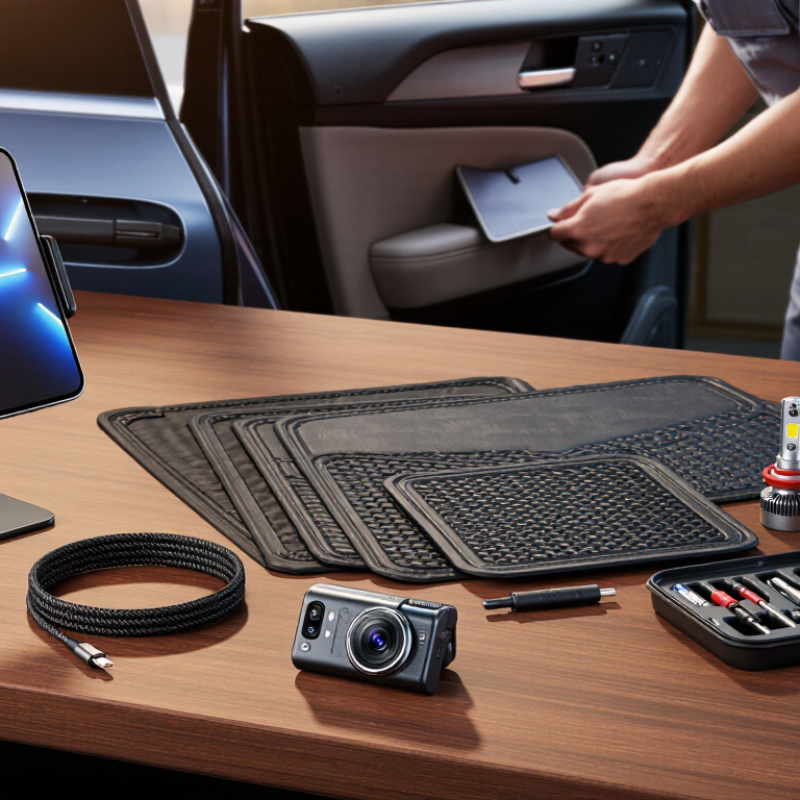
7 Best Ways to Avoid Low Quality Car Accessories?

Define Quality by ISO 9001, IATF 16949, FMVSS, and UNECE Standards

7 Best Ways to Avoid Low Quality Car Accessories?

Define Quality by ISO 9001, IATF 16949, FMVSS, and UNECE Standards

Quality starts with evidence, not attractive packaging. Ask suppliers for current certificates, test reports, material records, and batch traceability. ISO 9001 shows a controlled quality management system. It does not prove that every accessory is safe. IATF 16949 adds stronger automotive controls, including defect prevention, process monitoring, and supplier evaluation. A certificate can still hide weak daily practices.

Check whether the product matches the correct vehicle application. Inspect connectors, fasteners, wiring insulation, surface finish, and moving parts. Small gaps around a trim panel often reveal poor tooling. Request inspection samples from different production batches. One perfect sample proves very little. This is where buyers sometimes become careless.

Safety compliance needs separate attention. FMVSS requirements apply to relevant vehicle safety equipment in the United States. UNECE regulations may apply to approved components in other markets. Ask for the exact regulation number, testing scope, approval documents, and product identification. Do not accept vague claims such as “meets global standards.” Verify whether the document covers the actual model, function, and production version. Keep records of complaints, returns, and corrective actions. ISO systems expect improvement, but paperwork alone cannot replace physical testing.

Verify Fitment with VIN Data and Manufacturer Compatibility Records

Low-quality car accessories often begin with a confident-looking fitment claim. VIN verification replaces guesswork with vehicle-specific evidence. A VIN identifies production details, engine configuration, restraint systems, and factory options. Use it with manufacturer compatibility records, not a generic year range. A 2024 S&P Global Mobility report measured the average U.S. light-vehicle age at 12.6 years. Older vehicles may have different wiring, trim, or sensor layouts. Year alone is weak evidence.

Enter the complete 17-character VIN into a trusted catalog or service database. Confirm the model code, body style, engine, transmission, and build month. Then compare connector shape, mounting points, load rating, and software requirements. Manufacturer records should show exclusions, superseded part numbers, and required adapters. Save screenshots and order confirmations. This creates a useful audit trail. The 2024 Auto Care Association Factbook estimated the U.S. automotive aftermarket at roughly 400 billion dollars annually, making catalog accuracy commercially important.

When records disagree, pause and contact technical support with the VIN. Do not rely on a marketplace photo. I once trusted a year range. That shortcut was careless. A return is inconvenient, but an incorrect accessory can affect safety features or damage wiring. Keep the original packaging until physical fitment is confirmed. Some listings remain unclear, even after careful checking. That is a reason to verify twice.

7 Best Ways to Avoid Low Quality Car Accessories? - Verify Fitment with VIN Data and Manufacturer Compatibility Records

Verification Dimension What to Check Reliable Data or Evidence Practical Acceptance Criteria Common Warning Sign Recommended Action
1. VIN Identification Confirm the vehicle identification number before purchasing a vehicle-specific accessory. A readable 17-character VIN from the vehicle, registration document, or service record. The VIN should match across the vehicle and official documents. In standard 17-character formats, position 9 is used as a check digit in North American coding. The seller requests only the model name or production year and cannot process the complete VIN. Use the full VIN and remove personal registration details before sharing it publicly.
2. Model-Year and Build Verification Check model year, body style, engine, transmission, drivetrain, and production range. VIN decoding data plus a manufacturer compatibility record or official service catalog. Every vehicle attribute listed for the accessory should match the VIN-specific configuration, not just the vehicle's marketing name. The listing combines several generations or says “fits all models” without exclusions. Ask for a VIN-based fitment confirmation and compare the stated production dates.
3. Manufacturer Compatibility Records Verify application notes, superseded part references, installation restrictions, and excluded trims. Current electronic parts catalog records, technical bulletins, installation instructions, or vehicle-specific application charts. The accessory has a traceable application record with revision date, vehicle range, and clearly stated exclusions. Only a generic product title is provided, with no application table or installation documentation. Reject products that cannot be linked to a current compatibility record.
4. Physical Fit and Mounting Points Compare dimensions, hole spacing, connector position, clearance, and mounting hardware. Dimensioned drawings, installation templates, measured vehicle points, and complete hardware lists. Critical dimensions should match within the tolerance stated in the installation instructions; no drilling, forced bending, or unsafe modification should be required unless explicitly approved. Photos show gaps, stretched fasteners, missing clips, or mounting holes that require alteration. Measure the vehicle and accessory before installation; return any item with unexplained dimensional conflicts.
5. Electrical Compatibility Check nominal voltage, current draw, connector type, polarity, fuse requirement, and communication-system compatibility. Electrical specifications, wiring diagram, pinout, fuse rating, and vehicle-specific installation instructions. Voltage and connector configuration must match the vehicle circuit; current draw must remain within the circuit and fuse limits specified for the installation. No current rating is listed, wires are unlabeled, or the installation requires bypassing a fuse or safety module. Do not install until the wiring diagram and circuit protection requirements are confirmed.
6. Material, Load, and Environmental Performance Evaluate material specification, load rating, temperature range, water resistance, corrosion protection, and UV resistance. Published test results, engineering specifications, safety data, and clearly defined operating limits. The stated load and environmental ratings should exceed the vehicle's intended operating conditions, with test methods and units clearly identified. The product uses vague terms such as “heavy duty” without a numerical rating or test condition. Choose products with measurable ratings and retain the documentation for future maintenance.
7. Quality Control, Warranty, and Returnability Confirm batch traceability, inspection information, warranty period, installation support, and return conditions. Serial or batch number, inspection record, written warranty terms, installation manual, and a documented return policy. The seller provides contactable support, clear warranty exclusions, replacement procedures, and a return window long enough to verify fitment. There is no warranty address, no installation guidance, or the return policy excludes fitment problems. Inspect the item before installation, photograph the package, and keep invoices and compatibility records.

Best practice: Treat VIN data as the starting point, then confirm the exact vehicle configuration, physical dimensions, electrical requirements, and current compatibility records before installation.

Check NHTSA Recalls and SAE Test Evidence Before Purchasing

Before buying car accessories, check the NHTSA recall database for your vehicle’s year, model, and VIN. Recalls may involve safety belts, lighting parts, child restraints, or electrical equipment. They do not cover every accessory, so a clear search result is not proof of safety. Also review recent manufacturer notices and reported complaints. Keep screenshots of the results and the product’s exact model number.

SAE test evidence deserves careful attention. Look for the specific SAE standard, test date, laboratory name, sample description, and pass criteria. A statement such as “SAE tested” is too vague. SAE usually publishes technical standards, not automatic approval for every product. Ask whether the test covered the complete accessory, including brackets, wiring, fasteners, and installation points. A strong report should match the version you plan to purchase.

Inspect the item before installation. Check for sharp edges, loose stitching, brittle plastic, exposed wires, and unclear instructions. Compare the listed load rating with your real use, especially during heat, rain, or heavy vibration. Do not modify mounting points without qualified advice. Small details matter.

I may still miss something. Product pages can change, and test documents can be incomplete. When evidence conflicts, pause the purchase and contact a qualified mechanic or the relevant safety authority. A low price saves little if the accessory shifts, overheats, or blocks a safety feature.

Compare Materials, Load Ratings, UL Marks, and Laboratory Test Results

Low-quality car accessories often reveal themselves through weak materials, vague load ratings, or missing test evidence. Compare the material with its job. Thick polycarbonate usually resists impact better than thin brittle plastic. Reinforced nylon can handle repeated flexing, but heat may reduce its strength. Metal is not automatically safer. Poorly finished edges can damage wiring or upholstery.

Check the load rating against your vehicle manual, not the seller’s headline. A roof carrier rated for 75 kilograms may require evenly distributed weight and specific mounting points. The U.S. National Highway Traffic Safety Administration reports nearly 200 deaths and about 11,000 crashes from tire-related failures annually. That is not an accessory statistic, but it shows why small load errors deserve attention. Leave a margin below the stated limit. Real roads are rougher than test benches.

Look for a genuine UL mark when electrical safety matters, then verify the exact standard and product number. A mark applies to a tested configuration, not every similar item. Laboratory reports should identify test methods, sample numbers, temperatures, vibration cycles, and overload results. Standards such as ISO 16750 evaluate environmental stresses in road vehicles, including heat, vibration, and moisture. Ask for the full report. A single polished chart proves little. I once trusted a high load rating without checking mounting conditions; the accessory survived, but the fasteners loosened. That mistake was avoidable. Expect clearer evidence, even when it slows the purchase.

Review Warranty Terms, Seller Ratings, Return Policies, and Failure Data

Before buying a car accessory, I read the warranty terms slowly, not just the headline. Coverage length matters, but exclusions matter more. Check whether the warranty covers installation damage, electrical faults, corrosion, and premature wear. Some policies require professional installation, which can create unexpected costs. A clear claims process also shows stronger seller accountability. My mistake was trusting a long warranty without reading its conditions.

Seller ratings provide useful evidence, but average scores can hide important details. I look for recent reviews describing fit, materials, instructions, and real vehicle use. Repeated complaints about cracked clips or inaccurate measurements deserve attention. Verified purchase indicators help, although they are not perfect. I also examine the return policy before paying. Confirm the return window, restocking charges, shipping responsibility, and condition requirements. Photographing the unopened package can protect your record if the item arrives damaged.

Failure data adds another layer of practical judgment. Look for repair reports, recall notices, technical testing, and failure rates based on a meaningful sample. One dramatic complaint may be unusual, while dozens of similar reports suggest a pattern. Be careful with impressive claims that provide no testing method or date. I once dismissed several minor complaints because the product looked well engineered. That decision was too optimistic. Reliable research combines warranty language, seller behavior, return flexibility, and documented failures before installation begins.

FAQS

How can I judge an accessory’s quality before buying it?

Look for current certificates, test reports, material records, and batch traceability. Packaging proves little. A quality certificate shows controlled processes, not perfect products. Ask for samples from different production batches. One excellent sample is not enough.

Does a quality management certificate prove that an accessory is safe?

No. It shows that the supplier follows a management system. It does not prove every item passed safety testing. Ask for physical test results and production records. Paperwork cannot replace inspection.

What should I inspect on a car accessory?

Check connectors, fasteners, wiring insulation, surface finish, and moving parts. Look for uneven gaps around trim panels. Small gaps can indicate poor tooling. Compare mounting points and load ratings carefully. Details matter.

Why should I verify fitment with a VIN?

A complete 17-character VIN provides vehicle-specific information. It can reveal the engine, body style, transmission, and factory options. A model year alone is weak evidence. Older vehicles may have different wiring and sensor layouts.

What records should I compare before ordering?

Compare the VIN with compatibility records and manufacturer application data. Confirm model code, build month, connectors, mounting points, and software needs. Check exclusions, replacement numbers, and required adapters. Save screenshots and order confirmations.

What should I do when compatibility records disagree?

Pause the order. Contact technical support with the complete VIN. Do not trust a marketplace photo or broad year range. Keep the original package until physical fitment is confirmed. I once trusted a year range. That was careless.

Which warranty details deserve close attention?

Read exclusions, not only the coverage length. Check installation damage, electrical faults, corrosion, and premature wear. Some warranties require professional installation. That can add unexpected costs. Read slowly.

How can reviews and failure reports reveal low quality?

Read recent reviews about fit, materials, instructions, and real vehicle use. Repeated complaints about cracked clips or wrong measurements suggest a pattern. Check return windows, fees, shipping duties, and package conditions. One complaint may be unusual. Dozens deserve attention.

What safety documents should a supplier provide?

Request the exact regulation number, testing scope, approval document, and product identification. Confirm the document covers your vehicle, function, and production version. Avoid vague claims about worldwide compliance. Verify twice.

Conclusion

How to avoid low-quality car accessories begins with defining quality through recognized requirements, including ISO 9001 quality management, IATF 16949 automotive production controls, FMVSS safety expectations, and applicable UNECE standards. Before purchasing, confirm that the accessory matches your vehicle by checking VIN-based data, model year, dimensions, connection types, and manufacturer compatibility records. Review available safety notices, recall databases, and SAE-related test evidence rather than relying only on appearance or advertising claims.

Compare the product’s materials, load ratings, electrical safety marks such as UL where relevant, and independent laboratory test results. A reliable evaluation should also include the warranty length, coverage limitations, seller ratings, return process, and any documented failure data. Avoid products with unclear specifications, exaggerated promises, missing testing information, or inconsistent fitment details. Taking these steps helps reduce safety risks, prevent wasted money, and select accessories that are durable, compatible, and supported by transparent quality evidence.

Amelia

Amelia

Amelia is a seasoned marketing professional with a wealth of expertise in our company’s core offerings. With an unwavering passion for driving growth and innovation, she plays a pivotal role in shaping our marketing strategies and enhancing brand visibility. A key aspect of her responsibilities......