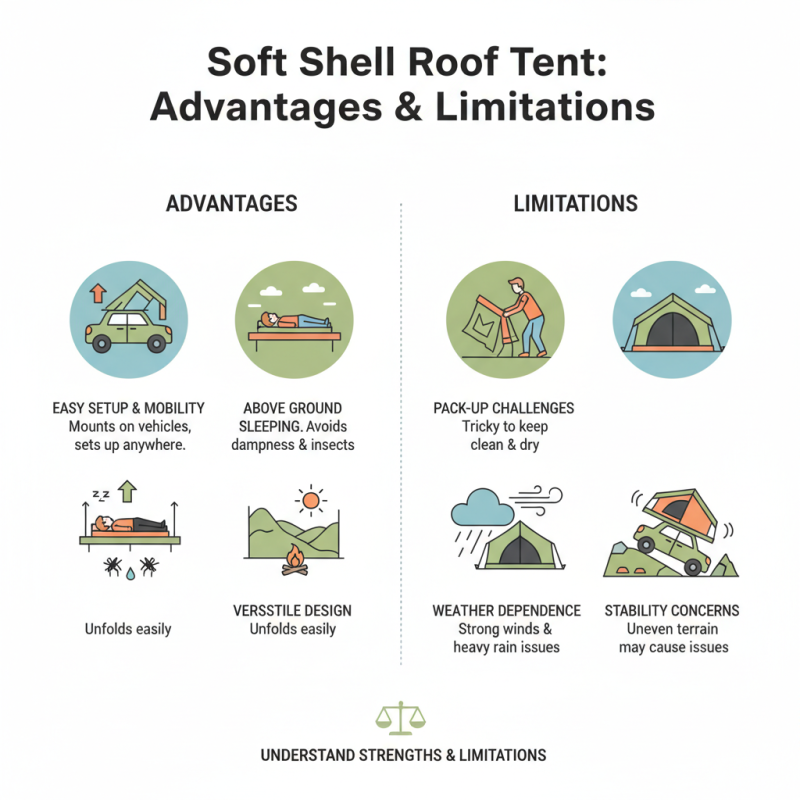
Soft Shell Roof Tents have gained popularity among outdoor enthusiasts. These tents offer a unique solution for camping on the go. They are mounted on vehicles, making them easy to set up anywhere.
When it comes to their design, Soft Shell Roof Tents are versatile. They unfold easily, allowing users to sleep above the ground. This feature helps to avoid dampness and insects. Despite their advantages, some users may find them challenging to pack up. It can be tricky to keep the tent clean and dry after a night’s use.
While Soft Shell Roof Tents simplify camping, they aren’t perfect. Weather can impact their usability. Strong winds or heavy rain may cause issues. Some may hesitate about the stability of these tents on uneven terrain. Understanding their strengths and limitations is key for potential users.
A soft shell roof tent is a versatile camping solution. It attaches to the roof of your vehicle. This design allows for quick setup anywhere. Imagine stopping by a scenic overlook. With a soft shell tent, you can set up camp in minutes.
These tents typically have a fabric outer layer. It provides protection from the elements. Many soft shell tents unfold like an accordion. This makes them relatively easy to use. Inside, you’ll find a cozy sleeping area. It often includes a comfortable mattress. Some models even have extra storage compartments.
However, the reality of using a soft shell tent can vary. Not all tents are built equally. Some may not hold up against harsh weather. Additionally, accessing gear from your vehicle can be tricky. You might find yourself climbing up the ladder often. This could be a challenge for some. A soft shell roof tent is an exciting option, but it isn't without its quirks.
Soft shell roof tents are gaining popularity among outdoor enthusiasts. They offer a unique camping experience atop your vehicle. These tents are designed with flexible materials that make them lightweight and easy to set up. Typically, they feature a soft outer shell that resembles a traditional tent but is attached to a mounting system on the roof of a vehicle. This design maximizes space and provides a comfortable sleeping area away from the ground.
One key feature of soft shell roof tents is their rapid deployment system. Most models can be set up within minutes, allowing users to enjoy their surroundings quickly. The tent fabric is often waterproof and breathable, keeping you dry and comfortable. Additionally, many tents come with built-in awnings for extra shade. Some even include customizable interiors, making it easier to organize your gear. However, some find the setup process can be tricky in windy conditions.
Another aspect to consider is insulation. While soft shell tents may not offer the same thermal properties as hard shell options, many are equipped with liners that enhance comfort. Ventilation is also vital in these tents, preventing condensation build-up. However, the reliance on zippers and seams means keeping them in good condition is essential. Users often reflect on the trade-off between convenience and durability when choosing their perfect soft shell roof tent.
| Feature | Description | Benefits |
|---|---|---|
| Material | High-quality waterproof fabric | Durable and weather-resistant |
| Setup Time | Under 5 minutes | Quick and convenient for travelers |
| Sleeping Capacity | 2-4 people depending on size | Flexible accommodation options |
| Weight | 40-120 lbs (varies by model) | Suitable for most vehicles |
| Ventilation | Mesh windows and vents | Improves airflow and reduces condensation |
| Storage | Integrated storage options | Keeps belongings organized and accessible |
Soft shell roof tents are gaining popularity among outdoor enthusiasts. These tents offer a unique blend of convenience and comfort. The construction of a soft shell roof tent typically includes durable fabrics and lightweight frames, making them both portable and sturdy.
Most soft shell tents use heavy-duty polyester or nylon that can withstand harsh weather conditions. They often feature a waterproof coating to keep the interior dry.
Many models utilize aluminum or fiberglass poles for support, ensuring durability while remaining light enough for easy installation. According to a recent industry report, about 70% of users prioritize ease of setup when selecting tents, highlighting the importance of thoughtful design.
However, not all soft shell roof tents are created equal. Some may lack proper insulation, making them less suitable for cold climates. Additionally, while most tents provide decent wind resistance, a few models have been reported to struggle during severe storms. This shows a need for ongoing innovation. As preferences evolve, manufacturers must refine designs to balance comfort, weight, and weather resilience. Evaluating product reviews and testing performance in real-world scenarios can be beneficial for users.
Setting up a soft shell roof tent can be straightforward, but it does require some attention to detail. Begin by selecting a flat and stable surface for your vehicle. This ensures that your tent will stand secure throughout the night. Check the weather forecast. If adverse conditions are expected, rethink your plans.
Open the tent bag carefully, avoiding any tearing. Lay the tent flat atop your vehicle. Each tent model may have unique mechanisms, so read the instructions closely. Attach the mounting brackets securely. Tighten them, but don't overdo it. Over-tightening can damage the tent or vehicle.
Now, expand the tent. This often involves pulling on straps or unzipping sections. Make sure it unfolds completely. Inspect all the poles, ensuring they are correctly positioned. If any pole bends, it might affect stability. Finally, stake down any extra fabric to prevent wind interference. Double-check every connection before settling in for the night.
Adjust the setup if something feels off. Remember, practice makes perfect, and every setup experience offers new lessons.
Soft shell roof tents are becoming quite popular among outdoor enthusiasts. They offer a unique camping experience, sitting atop your vehicle. Yet, their advantages and disadvantages deserve a closer inspection.
One major advantage of soft shell roof tents is their weight. They are generally lighter than hard shell options, making them easier to install and remove. This can be a game-changer for spontaneous trips. Another plus is the ample living space. Soft shell tents often have more interior room and can accommodate multiple sleepers comfortably. However, they can be less durable. Heavy rain and strong winds might cause leaks or even structural issues over time.
It’s important to consider the setup process. Some might find it straightforward, while others might struggle with it. Investing time in practice can help streamline this task.
When it comes to ventilation, soft shell tents can sometimes trap heat, especially in warmer weather. Ensuring proper airflow is crucial. Consider investing in additional fans or portable cooling solutions during summer trips.
Not every experience will be perfect. Users may find issues with condensation. Taking time to understand these factors can lead to a better camping experience. Being prepared can help address potential challenges along the way.
: They are tents attached to vehicles, designed for outdoor camping. They provide comfort above ground.
Most models allow setup in minutes, letting you enjoy nature quickly. However, windy conditions can complicate this.
They typically use heavy-duty polyester or nylon and lightweight frames. This combination ensures portability and durability.
Yes, many come with a waterproof coating to keep the interior dry. Regular maintenance is important for optimal performance.
Insulation can vary. Some tents include liners, but they may not match hard shell tents in thermal efficiency.
Ventilation helps prevent condensation. Yet, the zipper and seam reliance requires regular checks to maintain quality.
Choose a flat, stable surface and check the weather. Always ensure proper installation to avoid future troubles.
Many tents come with customizable interiors for gear organization. However, consider if this fits your needs.
They contemplate the balance between convenience, comfort, and long-term durability when selecting a tent.
Some models struggle in severe storms. Users should review performance data and experiences to make informed choices.
Soft Shell Roof Tents are innovative camping solutions designed to be mounted on vehicle rooftops, providing a versatile and comfortable sleeping space while traveling. These tents typically feature lightweight fabric construction, making them easy to transport and set up. Key features often include waterproof materials, integrated sleeping platforms, and ventilation systems that enhance comfort during use.
The construction of Soft Shell Roof Tents combines durable fabrics with robust frameworks, ensuring stability and protection against the elements. Setting up these tents is typically straightforward, following a step-by-step process that can be accomplished by one person in a matter of minutes. While Soft Shell Roof Tents offer numerous advantages such as portability and convenience, potential drawbacks include their higher cost compared to ground tents and possible limitations in space for larger groups. Overall, they provide a unique solution for outdoor enthusiasts seeking an elevated and efficient camping experience.

Vivi Auto Accessories